
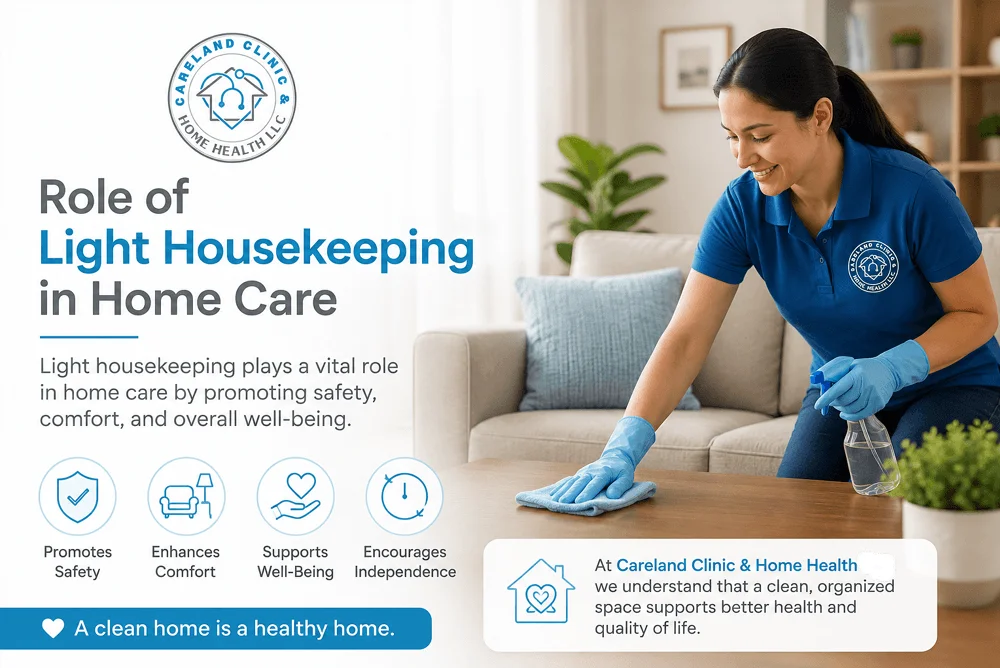
Role of Light Housekeeping in Home Care

Growing older is a little like driving a car with high mileage. The engine still works, but it needs more maintenance, regular inspections, and careful handling to keep running smoothly.

Recent reports show that nearly 90% of seniors prefer aging in place instead of moving into assisted living facilities. As more families choose in home support services, housekeeping has become one of the most requested caregiving services. Light housekeeping may sound simple on the surface, but it directly affects safety, emotional well-being, comfort, and even long-term health. A cluttered home can increase fall risks, create stress, and make seniors feel overwhelmed. On the other hand, a tidy and organized environment helps older adults maintain dignity and independence.

Families searching for in home care light housekeeping services often wonder what these services actually include. Is it basic cleaning? Laundry? Meal cleanup? Organization? The answer depends on the care plan, but generally, light housekeeping focuses on maintaining a healthy living environment rather than deep cleaning. Caregivers help seniors manage everyday household tasks so they can continue living comfortably at home.

Understanding Light Housekeeping in Senior Care

Many people hear the phrase light housekeeping and immediately picture simple dusting or sweeping. In reality, the service plays a much larger role in senior wellness and independent living. What is light housekeeping in senior care? It refers to everyday household support provided by caregivers to help seniors maintain a safe, comfortable, and organized home environment. These services are especially valuable for older adults who struggle with physical limitations, memory issues, chronic illnesses, or recovery after surgery.

Unlike professional maid services that focus on heavy duty cleaning, caregiving housekeeping services are designed around the senior’s daily needs. The goal is not to make the home look like a luxury hotel. The goal is to create a clean and safe environment that supports healthy aging. Caregivers typically help with vacuuming, washing dishes, changing bed linens, organizing clutter, doing laundry, taking out trash, and sanitizing frequently used areas.

The emotional side of housekeeping matters too. A cluttered environment can quietly increase anxiety and depression in seniors. Many older adults grew up taking pride in maintaining their homes, so losing the ability to handle chores can feel frustrating or embarrassing. A compassionate caregiver steps in without making the senior feel dependent or helpless. That emotional balance matters more than many people realize.
Research shows that the demand for home care continues to rise as millions of older adults choose to age at home instead of moving into facilities. Families are now paying closer attention to homemaking support because it directly impacts safety and quality of life. Something as small as folded laundry or a clean kitchen counter can restore comfort, confidence, and peace of mind for aging adults.

What Does Light Housekeeping Include in Home Care?

Families often ask, What does light housekeeping include in home care? The answer can vary slightly between agencies, but most caregiving providers offer a similar list of homemaking tasks designed to support daily living. These tasks focus on maintaining cleanliness, reducing hazards, and helping seniors stay comfortable in their homes.

Here’s a quick comparison of common services:
Light Housekeeping TasksTypically Included
Washing dishesYes
Laundry and folding clothesYes
Vacuuming and sweepingYes
Changing bed linensYes
Taking out trashYes
Organizing living spacesYes
Meal cleanupYes
Deep carpet cleaningNo
Heavy liftingNo
Exterior house cleaningNo
Caregivers are not professional janitors or restoration crews. Their role centers on manageable daily tasks that contribute to overall well-being. This distinction matters because families sometimes expect intensive cleaning services that fall outside standard caregiving responsibilities.
Another important detail is consistency. Light housekeeping becomes powerful because it’s ongoing. Instead of waiting for a home to become messy or unsafe, caregivers maintain order throughout the week. This steady routine reduces stress for seniors and helps family members feel reassured. It’s a little like maintaining a car. Regular maintenance prevents larger problems down the road.

Experts in aging in place services often emphasize that environmental safety is one of the biggest factors in helping seniors remain independent longer. When homes stay clean and organized, seniors are less likely to experience accidents, infections, or emotional distress tied to isolation and clutter.

Why Seniors Need Light Housekeeping Support

Aging changes the body in ways that younger people sometimes overlook. Bending down to pick up laundry, carrying groceries, scrubbing floors, or standing at the sink for long periods can become physically painful. Seniors dealing with arthritis, osteoporosis, Parkinson’s disease, or balance issues often struggle with even small household tasks. Something as harmless as reaching for a mop can suddenly become a fall risk.
This is why the importance of light housekeeping for seniors goes far beyond appearance. Cleanliness directly affects physical safety and emotional stability. Cluttered walkways increase fall hazards. Dust buildup can worsen breathing conditions. Dirty kitchens can attract bacteria or pests. Small household problems can slowly snowball into serious health concerns if they’re ignored for too long.
There’s also a strong emotional connection between seniors and their homes. Most older adults have spent decades building memories in the same space. Their home represents independence, family traditions, comfort, and familiarity. Losing the ability to maintain that environment can create sadness and frustration. Caregivers help preserve dignity by supporting seniors in a respectful and encouraging way instead of taking complete control.
Current aging-in-place studies reveal that older adults strongly prefer staying in familiar environments as they age. Families are responding by investing more in home care services that combine companionship, personal support, and housekeeping assistance. Light housekeeping has quietly become one of the foundations of successful home care because it keeps the home functioning safely without disrupting the senior’s independence.

Importance of Light Housekeeping for Seniors

The connection between housekeeping and senior safety is stronger than many families realize. Falls remain one of the leading causes of injury among older adults, and household clutter plays a major role in those accidents. Loose rugs, piles of laundry, slippery kitchen floors, and blocked walkways create dangerous conditions that caregivers actively help prevent. A cleaner home is not just visually pleasing — it’s protective.
Light housekeeping also supports healthier living conditions. Seniors with weakened immune systems are more vulnerable to infections caused by bacteria, mold, and poor sanitation. Bathrooms and kitchens especially need consistent upkeep. Caregivers help disinfect surfaces, wash dishes, dispose of spoiled food, and maintain hygiene standards that reduce health risks. These small routines become incredibly valuable over time.
Mental health improves in cleaner spaces too. Have you ever noticed how overwhelming clutter can feel? Seniors experience that same emotional weight, sometimes even more intensely. A tidy room creates calmness and stability. For seniors living alone, housekeeping visits also provide social interaction and emotional reassurance. Caregivers often become trusted companions who notice changes in mood, appetite, or health conditions during routine visits.

The numbers behind aging in place trends continue to show strong demand for in home support services. Millions of unpaid family caregivers already assist aging loved ones every year. Professional homemaking support helps reduce burnout for those family members while ensuring seniors receive consistent assistance. In many cases, light housekeeping delays the need for assisted living by helping seniors safely remain at home longer.

Common In-Home Care Light Housekeeping Services

Most in-home care light housekeeping services focus on practical daily support. These tasks may seem ordinary at first glance, but together they dramatically improve daily life for seniors. Laundry assistance is one of the most appreciated services because carrying baskets, bending, and folding clothes can become physically exhausting. Caregivers wash, dry, fold, and organize clothing while also helping change bed linens and maintain fresh sleeping spaces.
Kitchen support is another major area. Seniors sometimes skip meals or avoid cooking because cleaning afterward feels overwhelming. Caregivers help with meal preparation, washing dishes, wiping counters, organizing groceries, and taking out trash. A clean kitchen encourages better nutrition and safer food handling habits.

Bathrooms require careful attention too because they’re one of the highest risk areas for falls. Light housekeeping services often include sanitizing sinks, wiping mirrors, organizing toiletries, replacing towels, and ensuring floors stay dry and clutter-free. These simple tasks reduce hazards and help seniors maintain hygiene comfortably.

Here’s a sample senior home care housekeeping checklist commonly used by caregivers:
Daily TasksWeekly Tasks
Wash dishesVacuum carpets
Wipe countersChange bed linens
Make the bedDust furniture
Take out trashLaundry and folding
Organize clutterBathroom sanitizing
Sweep kitchen floorRefrigerator cleanup
These services blend naturally into the caregiving routine. They don’t feel cold or mechanical. Instead, they create an atmosphere where seniors can continue enjoying their homes without feeling burdened by physical limitations.

Personal Care and Homemaking Services Explained

Families often hear the phrase personal care and homemaking services while researching senior care agencies. Although they sound similar, they actually cover different forms of assistance. Homemaking focuses on maintaining the household, while personal care supports the senior directly with daily activities like bathing, dressing, grooming, toileting, mobility assistance, and medication reminders.

The combination of these services creates a more complete support system. Imagine a caregiver helping an older adult prepare breakfast, tidy the kitchen afterward, assist with laundry, and provide companionship throughout the afternoon. That balance allows seniors to maintain routines while receiving practical support exactly where they need it most.
Family caregivers benefit tremendously from these services too. Millions of people already provide unpaid eldercare for aging relatives, often while juggling careers and children of their own. Burnout becomes a real issue when family members try to manage everything alone. Professional caregivers step in as partners, easing stress while ensuring consistent care for seniors.

There’s also something deeply human about homemaking services. They preserve normal life. Seniors can still enjoy familiar routines, favorite chairs, home cooked meals, and treasured memories without the constant pressure of maintaining every household chore themselves. In many ways, light housekeeping acts like the invisible thread holding daily comfort together.

Choosing Home Care Services With Housekeeping Near Me

Searching online for home care services with housekeeping near me can feel overwhelming because there are so many providers offering different levels of support. Families should focus on agencies that create personalized care plans rather than offering generic services. Every senior has unique physical, emotional, and household needs.

One of the first questions families should ask is whether caregivers are trained specifically in senior homemaking assistance. Senior care requires patience, empathy, and safety awareness. It’s not just about cleaning. Caregivers need to recognize fall hazards, mobility challenges, memory issues, and emotional sensitivities while working inside someone’s home.

Local care providers also offer advantages because they understand community resources, nearby healthcare systems, and regional support networks. Families in Pennsylvania searching for in home caregivers West Lawn, PA often prioritize agencies that can provide flexible scheduling, companionship, homemaking support, and personalized senior assistance.

Here are a few helpful questions families should ask before hiring a home care provider:
Choosing the right caregiver is about trust as much as skill. Seniors deserve support that feels respectful and compassionate rather than rushed or impersonal.

In-Home Caregivers West Lawn, PA

Families looking for in home caregivers in West Lawn, PA often want a balance between practical support and emotional companionship. Local caregiving services help seniors continue living comfortably in familiar neighborhoods while receiving assistance tailored to their needs. Housekeeping support becomes especially valuable for seniors who want independence but struggle with physically demanding chores.

Caregivers in local communities often build strong long-term relationships with clients. They become familiar faces who understand routines, preferences, and health concerns. That consistency creates emotional comfort for seniors and reassurance for family members. Whether it’s helping organize the kitchen, changing linens, preparing meals, or tidying living spaces, caregivers provide stability that supports aging in place.

West Lawn families are increasingly exploring in home care as an alternative to assisted living facilities. National trends show that seniors overwhelmingly prefer remaining in their own homes whenever possible. Light housekeeping services play a major role in making that possible because they reduce physical strain while preserving dignity and independence.

The Future of Senior Home Care and Homemaking

The future of home care is moving toward personalized support systems designed around aging in place. As the senior population continues growing, demand for homemaking and caregiving services is expected to rise sharply. Industry reports project major growth in aging at home services over the next decade. Families are realizing that quality home care is not only about medical assistance. Emotional wellness, safety, companionship, and housekeeping matter just as much.

Technology may help improve scheduling, communication, and monitoring in the future, but human caregivers will always remain essential. Seniors need compassion, conversation, trust, and personal interaction. No app or machine can replace the comfort of a caregiver helping tidy a room while chatting about family memories over coffee.
The role of light housekeeping in home care will likely continue expanding as more seniors prioritize independent living. Clean homes support healthier aging, reduce stress, and create safer living conditions. What seems like a simple household chore can actually become a powerful tool for preserving dignity and quality of life.

Conclusion

The role of light housekeeping in home care reaches far beyond basic cleaning tasks. It creates safer homes, supports emotional well-being, reduces stress for families, and helps seniors maintain independence longer. From laundry and meal cleanup to organizing living spaces and preventing fall hazards, these services quietly improve everyday life in meaningful ways.

As more seniors choose to age in place, the demand for compassionate homemaking support continues growing. Families are recognizing that caregiving isn’t only about medical needs. Comfort, cleanliness, and dignity matter too. A well maintained home can help seniors feel secure, respected, and connected to the life they’ve built over decades.

For families exploring home care options, light housekeeping services often become one of the most valuable forms of support. Sometimes the smallest acts   folded laundry, a clean kitchen, or an organized living room can make the biggest difference in helping seniors feel truly at home.

FAQs

Light housekeeping in senior care includes everyday household tasks such as laundry, dishwashing, vacuuming, organizing clutter, changing bed linens, and meal cleanup. These services help seniors maintain a safe and comfortable home environment.
It typically includes cleaning common living areas, wiping surfaces, taking out trash, doing laundry, washing dishes, and maintaining tidy walkways. Deep cleaning and heavy-duty labor are usually not included.
Light housekeeping reduces fall risks, improves hygiene, supports emotional well-being, and helps seniors remain independent while aging in place safely.
Many home care agencies combine personal care and homemaking services into one care plan. This allows caregivers to assist with both household chores and daily living activities.
Search for licensed local home care agencies that offer customized senior support plans. Ask about caregiver training, included housekeeping tasks, scheduling flexibility, and safety protocols before choosing a provider.