
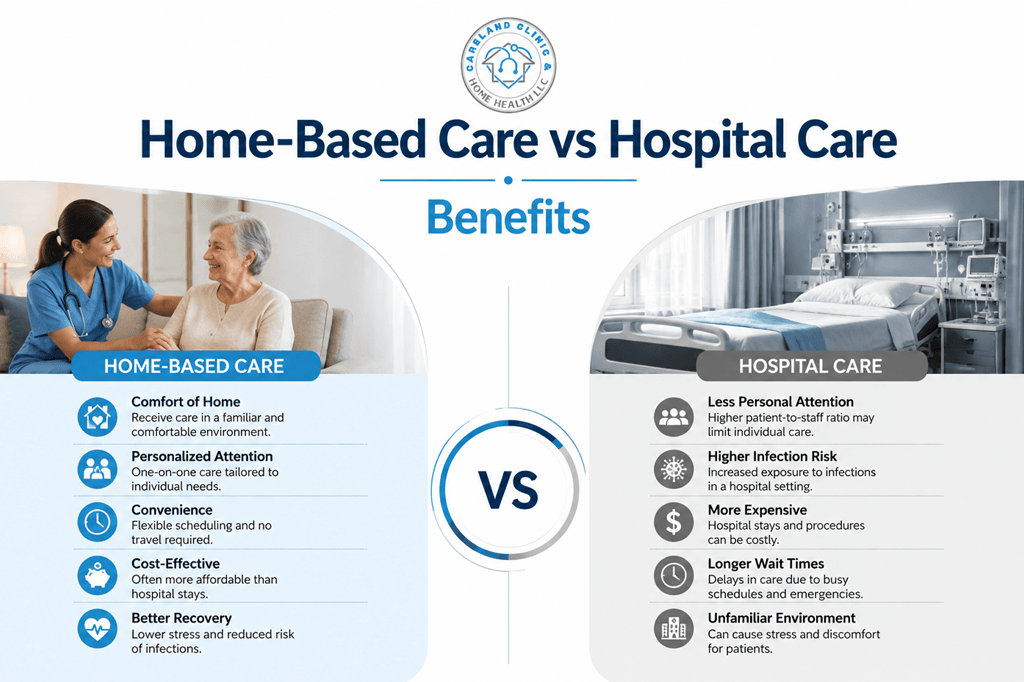
Home-Based Care vs Hospital Care Benefits

When families face an important healthcare decision, one question often comes up again and again: should a loved one receive treatment at home or stay in a hospital setting? Over the last few years, home healthcare services have become far more advanced, personalized, and accessible for seniors, Medicare patients, and individuals dealing with chronic illnesses. Many families now realize that healing does not always need fluorescent hospital lights, crowded hallways, and constant transfers between rooms. Sometimes, the best recovery space is the comfort of home itself.
Home Based Care vs Hospital Care

For many Medicare patients, the shift toward home based care is not just about convenience. It is about dignity, emotional well being, personalized attention, and long term health management. Studies show that millions of Medicare beneficiaries now rely on home health services for chronic disease management, rehabilitation, and activities of daily living support. According to recent healthcare research, more than two-thirds of Medicare beneficiaries live with multiple chronic conditions, increasing the need for flexible and patient centered care models.

Understanding the Difference Between Home Care and Hospital Care

Healthcare is no longer a one sizef its all system. Hospitals remain essential for emergency surgeries, trauma treatment, and intensive medical intervention, but many patients today need something different after stabilization. They need ongoing support, medication management, rehabilitation, companionship, and assistance with daily routines. That is where home based care enters the picture.

Home healthcare includes medical and non medical services provided directly inside a patient’s home. These services often involve skilled nursing, medication monitoring, physical therapy, chronic disease management, wound care, and support with everyday activities such as bathing, dressing, meal preparation, and mobility assistance. Unlike hospitals, where medical staff divide attention among many patients, home care focuses on individualized support tailored to one person’s unique health condition and lifestyle.

Hospitals, on the other hand, are designed primarily for acute care situations. They are excellent for emergencies and specialized treatment but can sometimes feel overwhelming for elderly patients or individuals managing long term illnesses. Constant noise, unfamiliar routines, and limited personal attention may increase anxiety and emotional fatigue. For seniors especially, long hospital stays can feel like trying to rest in the middle of a busy airport terminal there is always movement, interruptions, and stress.

Why More Medicare Patients Prefer Home Healthcare

The demand for home healthcare has grown dramatically among Medicare patients. Recent healthcare reports show that home-based services continue expanding because they help patients manage chronic illnesses while avoiding unnecessary hospital visits.

One major reason is the rise of chronic health conditions like diabetes, heart disease, arthritis, and respiratory illnesses. These conditions require long term monitoring rather than short-term emergency intervention. Medicare now supports many home healthcare services for patients with chronic conditions, including skilled nursing and therapy programs.

Emotional health also plays a massive role in recovery. Think about how people feel when they sleep in their own bed, eat familiar meals, and remain surrounded by loved ones. Recovery often feels less frightening at home. Seniors especially benefit from maintaining routines and personal independence. Home care allows patients to preserve a sense of identity rather than feeling like just another room number in a large medical facility.
Research has also shown that home healthcare programs may reduce hospital readmissions and improve patient satisfaction. Patients receiving care at home frequently experience lower stress levels and better emotional comfort during treatment.

Benefits of Home Care vs Hospital Care

The benefits of home care vs hospital care become especially clear when patients require long term support rather than emergency treatment. One of the biggest advantages is personalized attention. In hospitals, nurses and physicians often rotate between many patients throughout the day. Home healthcare offers more focused, one on one interaction that helps caregivers better understand a patient’s routines, concerns, and medical history.

Another major benefit is the reduced risk of hospital acquired infections. Hospitals naturally contain more exposure to viruses, bacteria, and other illnesses due to the high number of patients being treated simultaneously. Seniors and immunocompromised individuals are particularly vulnerable to these risks. Receiving treatment at home significantly limits unnecessary exposure to contagious illnesses.

Home healthcare also supports independence in ways hospitals simply cannot. Seniors can continue engaging in familiar activities while receiving medical care. Small things like walking through their own kitchen, sitting in a favorite chair, or interacting with family pets may seem simple, but they contribute heavily to emotional stability and confidence.

Advantages of Home Health Care Over Hospital Treatment

The advantages of home health care over hospital settings become even more noticeable during recovery periods. Healing at home often improves emotional resilience because patients feel more relaxed and secure. Hospitals can sometimes feel emotionally draining, especially during extended stays. Bright lights, alarms, and constant interruptions make quality rest difficult.
Home healthcare creates an environment where recovery feels natural instead of institutional. Patients can maintain routines, interact freely with loved ones, and enjoy greater privacy. Family involvement also becomes easier and more meaningful. Relatives can participate actively in care decisions, monitor progress closely, and provide emotional encouragement throughout recovery.

One on one care giver relationships also strengthen communication. Care providers working in home settings often build stronger trust with patients because interactions feel more personal. This can improve medication compliance, encourage healthier habits, and reduce feelings of isolation. For seniors who live alone, elderly companion care at home can be life changing emotionally as well as physically.

Healthcare technology has also improved dramatically in recent years. Remote monitoring tools, virtual physician consultations, and in home therapy services now allow many patients to receive advanced care without repeated hospital visits. According to recent healthcare reports, remote patient care programs continue helping Medicare patients manage chronic illnesses more effectively while reducing healthcare utilization costs.

Home Care for Elderly Patients

Aging adults often need more than medical treatment alone. They need companionship, emotional reassurance, and practical help with everyday life. That is why elderly companion care at home has become such an important part of modern healthcare services.

Loneliness can quietly damage both physical and mental health in seniors. Home caregivers provide conversation, social interaction, and emotional support alongside healthcare services. Something as simple as sharing meals, talking during walks, or helping with hobbies can dramatically improve a senior’s mood and mental well being.

Safety is another important concern. Falls remain one of the leading causes of injury among elderly adults. Home healthcare providers help create safer living environments by assisting with mobility, monitoring medications, and reducing physical hazards around the home. Instead of forcing seniors into unfamiliar facilities, home care allows them to age in place while receiving professional assistance.
For families, this arrangement often brings peace of mind. Knowing a loved one receives compassionate support inside their own home reduces anxiety and helps families stay more connected during treatment or recovery periods.
These services blend naturally into the caregiving routine. They don’t feel cold or mechanical. Instead, they create an atmosphere where seniors can continue enjoying their homes without feeling burdened by physical limitations.

Comparing Home Healthcare and Hospital Costs

Healthcare costs remain a serious concern for many families. Long hospital stays can quickly become expensive, especially when ongoing rehabilitation or chronic disease management is required. Home healthcare often provides a more affordable long-term solution for eligible patients.
Medicare covers many home health services for qualifying individuals, including skilled nursing care, therapy, and chronic condition management. Recent Medicare guidelines emphasize that patients do not necessarily need to show improvement for continued home healthcare coverage. Services may remain covered when medically necessary to maintain condition stability or prevent decline.

Home based care may also reduce indirect expenses such as transportation, repeated emergency visits, and caregiver burnout. Families avoid the constant travel associated with hospital visits while patients receive consistent support in a comfortable setting.

Some healthcare studies even suggest that home based treatment programs can reduce overall healthcare utilization and improve patient outcomes. While hospitals remain critical for emergency care, many long term healthcare needs can now be handled effectively at home with the right professional support system.

Choosing the Right Home Care Clinic in West Lawn PA

Finding a trusted home care clinic West Lawn PA families can rely on is one of the most important healthcare decisions a person can make. Compassion, professionalism, personalized treatment plans, and responsive communication all matter when selecting a provider.

Careland Clinic & Home Health focuses on personalized healthcare solutions designed around patient comfort and long term wellness. Services such as personalized primary care, chronic disease management at home, skilled nursing, and elderly companion care help patients maintain independence while receiving professional support.

For families caring for aging parents or loved ones with chronic illnesses, choosing the right provider is about more than medical treatment alone. It is about trust, compassion, reliability, and preserving quality of life.

Conclusion

The benefits of home care vs hospital care include lower stress, greater independence, stronger family involvement, reduced infection risks, and better support for daily living activities. Hospitals remain essential for emergencies and specialized treatment, but home healthcare continues proving itself as a compassionate and highly effective option for recovery and chronic disease management.

technology and in home medical services continue evolving, the future of patient centered care will likely

As healthcare technology and in home medical services continue evolving, the future of patient-centered care will likely become even more home focused. For many families, that future already feels like the right choice today.

FAQs

Home healthcare offers personalized attention, emotional comfort, lower infection risks, family involvement, and support with daily living activities while allowing patients to remain in familiar surroundings.
Yes, Medicare covers many home healthcare services for eligible patients, including skilled nursing, therapy, and chronic disease management when medically necessary.
Absolutely. Home healthcare is widely used for managing conditions such as diabetes, heart disease, arthritis, and respiratory illnesses through monitoring, therapy, and medication management.
Elderly companion care may include conversation, meal assistance, mobility support, medication reminders, transportation help, and emotional companionship for seniors living independently.
Look for experienced caregivers, personalized treatment plans, Medicare support, positive patient reviews, and comprehensive services like chronic disease management and daily living assistance.