For many Medicare patients, the shift toward home based care is not just about convenience. It is about dignity, emotional well being, personalized attention, and long term health management. Studies show that millions of Medicare beneficiaries now rely on home health services for chronic disease management, rehabilitation, and activities of daily living support. According to recent healthcare research, more than two-thirds of Medicare beneficiaries live with multiple chronic conditions, increasing the need for flexible and patient centered care models.
Healthcare is no longer a one sizef its all system. Hospitals remain essential for emergency surgeries, trauma treatment, and intensive medical intervention, but many patients today need something different after stabilization. They need ongoing support, medication management, rehabilitation, companionship, and assistance with daily routines. That is where home based care enters the picture.
Home healthcare includes medical and non medical services provided directly inside a patient’s home. These services often involve skilled nursing, medication monitoring, physical therapy, chronic disease management, wound care, and support with everyday activities such as bathing, dressing, meal preparation, and mobility assistance. Unlike hospitals, where medical staff divide attention among many patients, home care focuses on individualized support tailored to one person’s unique health condition and lifestyle.
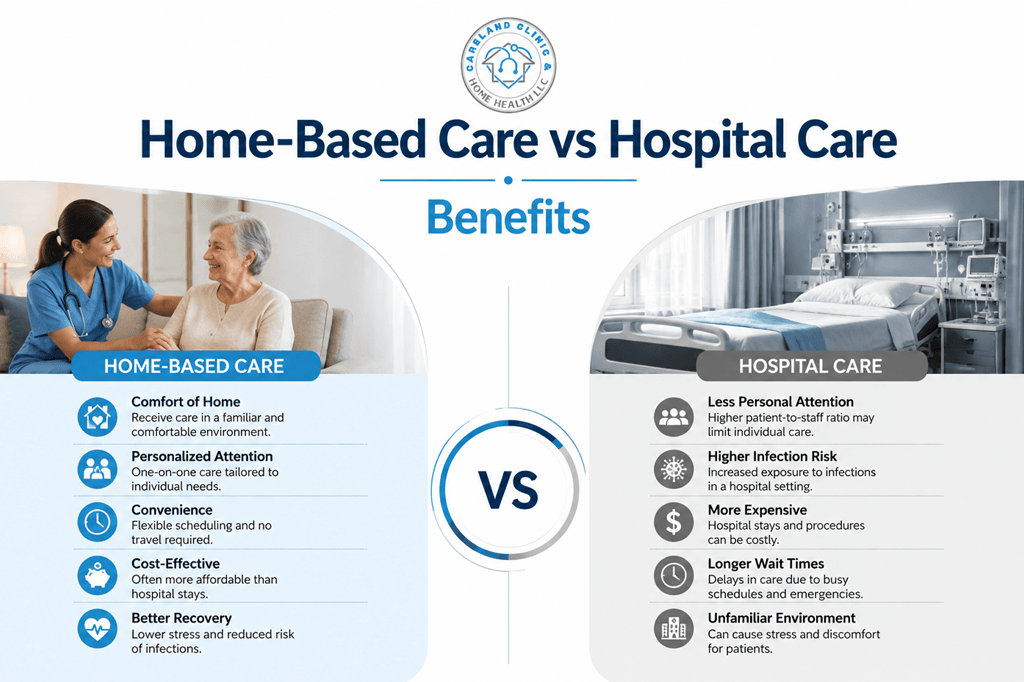
Hospitals, on the other hand, are designed primarily for acute care situations. They are excellent for emergencies and specialized treatment but can sometimes feel overwhelming for elderly patients or individuals managing long term illnesses. Constant noise, unfamiliar routines, and limited personal attention may increase anxiety and emotional fatigue. For seniors especially, long hospital stays can feel like trying to rest in the middle of a busy airport terminal there is always movement, interruptions, and stress.
One major reason is the rise of chronic health conditions like diabetes, heart disease, arthritis, and respiratory illnesses. These conditions require long term monitoring rather than short-term emergency intervention. Medicare now supports many home healthcare services for patients with chronic conditions, including skilled nursing and therapy programs.
The benefits of home care vs hospital care become especially clear when patients require long term support rather than emergency treatment. One of the biggest advantages is personalized attention. In hospitals, nurses and physicians often rotate between many patients throughout the day. Home healthcare offers more focused, one on one interaction that helps caregivers better understand a patient’s routines, concerns, and medical history.
Another major benefit is the reduced risk of hospital acquired infections. Hospitals naturally contain more exposure to viruses, bacteria, and other illnesses due to the high number of patients being treated simultaneously. Seniors and immunocompromised individuals are particularly vulnerable to these risks. Receiving treatment at home significantly limits unnecessary exposure to contagious illnesses.
One on one care giver relationships also strengthen communication. Care providers working in home settings often build stronger trust with patients because interactions feel more personal. This can improve medication compliance, encourage healthier habits, and reduce feelings of isolation. For seniors who live alone, elderly companion care at home can be life changing emotionally as well as physically.
Healthcare technology has also improved dramatically in recent years. Remote monitoring tools, virtual physician consultations, and in home therapy services now allow many patients to receive advanced care without repeated hospital visits. According to recent healthcare reports, remote patient care programs continue helping Medicare patients manage chronic illnesses more effectively while reducing healthcare utilization costs.
Loneliness can quietly damage both physical and mental health in seniors. Home caregivers provide conversation, social interaction, and emotional support alongside healthcare services. Something as simple as sharing meals, talking during walks, or helping with hobbies can dramatically improve a senior’s mood and mental well being.
Home based care may also reduce indirect expenses such as transportation, repeated emergency visits, and caregiver burnout. Families avoid the constant travel associated with hospital visits while patients receive consistent support in a comfortable setting.
Some healthcare studies even suggest that home based treatment programs can reduce overall healthcare utilization and improve patient outcomes. While hospitals remain critical for emergency care, many long term healthcare needs can now be handled effectively at home with the right professional support system.
Finding a trusted home care clinic West Lawn PA families can rely on is one of the most important healthcare decisions a person can make. Compassion, professionalism, personalized treatment plans, and responsive communication all matter when selecting a provider.
Careland Clinic & Home Health focuses on personalized healthcare solutions designed around patient comfort and long term wellness. Services such as personalized primary care, chronic disease management at home, skilled nursing, and elderly companion care help patients maintain independence while receiving professional support.
technology and in home medical services continue evolving, the future of patient centered care will likely
As healthcare technology and in home medical services continue evolving, the future of patient-centered care will likely become even more home focused. For many families, that future already feels like the right choice today.