A lot of people mix these terms up, and honestly, it’s easy to see why given how much their services overlap in the medical world.
They’re closely related, sure, but they’re not identical in scope or training. Knowing the specific difference can actually help you make smarter healthcare choices, save time on travel to different offices, and even avoid unnecessary referrals to high cost specialists. So, let’s break it all down in plain English, no medical dictionary or complex jargon required.
Both primary care providers and family medicine doctors are often your first stop when you’re feeling unwell or just need a routine checkup. They both handle essential tasks like annual physical exams, immunizations, and chronic disease management. From the outside, their daily roles look almost identical because they both act as the “gatekeepers” of your health.
But under the hood? There are a few key differences worth knowing. While their goals are the same keeping you healthy the way they are trained and the variety of patients they see can differ significantly. Understanding these nuances helps you pick a provider that aligns with your lifestyle.
Choosing the right type of provider can shape your long term care and overall satisfaction with the medical system. It affects how personal your treatment feels, how many different specialists you may need to see for different family members, and how smoothly your healthcare journey goes over time.
Primary care is your main point of contact with the healthcare system. Think of it as your health home base or the “quarterback” of your medical team. A primary care provider focuses on overall wellness, disease prevention, diagnosis, and ongoing care for non emergency issues.
When someone asks, what is primary care? the simplest answer is this it’s everyday healthcare for everyday life. It is a broad umbrella term that covers several types of doctors, including internists, pediatricians, and family practitioners.
A primary care clinic handles a wide range of health needs, from mild illnesses like the flu to long term conditions like heart disease. These clinics are designed to be accessible and comprehensive, serving as the first line of defense against illness.
Regular visits help catch small issues before they turn into big, expensive, or dangerous problems. This proactive approach includes:
Your annual physical exams are like a yearly tune up for your body. They help track changes in your vitals over time and keep your health on the right path by establishing a “baseline” for what is normal for you. During these visits, your provider reviews your medications and ensures your body is functioning at its peak.
Living with diabetes, high blood pressure, or asthma requires constant vigilance. Primary care providers manage ongoing treatment plans, monitor lab results, and adjust care as needed to prevent complications. They ensure that your chronic conditions stay managed so they don’t interfere with your quality of life.
Family medicine is a specific medical specialty within the broader field of primary care. Family doctors are uniquely trained to treat patients of all ages, from newborns and toddlers to teenagers, adults, and seniors. They receive diverse training that includes pediatrics, internal medicine, and sometimes even basic obstetrics.
So when people ask, what is family medicine? it’s primary care with a family first approach. It’s the practice of caring for the individual within the context of their entire family unit.
Family medicine doctors care for everyone under one roof, making them incredibly versatile. Instead of juggling a pediatrician for your kids and a separate internist for yourself, your whole household can visit the same provider. This simplifies scheduling and ensures that one doctor has a complete picture of your family’s health environment.
Family doctors often treat multiple generations, from grandparents down to grandchildren. They don’t just know your chart they know your history, your lifestyle, your stressors, and your family patterns. This deep relationship allows them to spot hereditary trends early and provide care that is deeply personalized and empathetic.
All family medicine doctors are primary care providers, but not all primary care providers practice family medicine. The distinction lies in their residency training. Family medicine doctors spend years learning to treat everyone, whereas other primary care providers might specialize in internal medicine (adults only) or pediatrics (children only).
The main difference comes down to the age range and the breadth of the patient base.
If you want one doctor who can grow with your children and treat the whole family at once, family medicine is a solid pick. If you’re an adult looking for focused care on adult onset diseases or complex internal issues, a general primary care provider specializing in internal medicine works just fine.
While people use these terms interchangeably, there is a technical difference. Years ago, general practitioners treated a wide range of patients without undergoing a specific residency after medical school. Today, family practice doctors undergo three years of formal residency training specifically in the field of family medicine.
Family practice doctors today are board certified and trained to handle complex, long term care across all age groups using evidence based medicine. That’s a big step up from the old school GP model, as modern family practitioners are equipped with advanced diagnostic skills and a deeper understanding of chronic disease prevention.
Nurse practitioners (NPs) play a huge and vital role in modern healthcare. They are advanced practice registered nurses who have completed additional masters or doctoral levels of education. They diagnose conditions, prescribe medications, order lab tests, and provide the same high quality preventive care as traditional doctors.
Many patients in West Lawn, PA rely on nurse practitioners for accessible, compassionate care especially in busy primary care clinics where timely visits matter. NPs are often praised for their holistic approach, spending extra time with patients to explain treatment plans and focus on overall wellness rather than just treating symptoms.
If you’re an adult managing specific chronic conditions related to aging or just need routine checkups and don’t have children at home, a primary care provider specializing in internal medicine may be all you need. They provide deep expertise in adult health that is highly focused.
If you want consistent care for kids, parents, and grandparents alike, family medicine offers that convenient one stop solution. It allows one doctor to see the “big picture” of how illnesses or genetic traits might be moving through your family, providing a level of care that is both comprehensive and familiar.
Primary care services in Pennsylvania cover a broad spectrum of medical needs tailored to the local population. These services include:
A trusted primary care clinic in West Lawn focuses on community health, accessibility, and personalized care plans. By staying local, these clinics ensure that residents don’t have to travel far for high quality medical attention, fostering a stronger bond between the doctor and the community.
Quality care shouldn’t break the bank or be a source of financial stress. Many clinics offer affordable primary care services for families and individuals, accepting various insurance plans and offering sliding scale fees to ensure that everyone has access to the medical help they deserve.
Local clinics understand local needs, environmental factors, and regional health trends. That community connection makes a real difference in how care is delivered it feels less like a transaction and more like a partnership in your long term health.
Careland Clinic and Home Health emphasizes comfort, continuity, and patient trust above all else. In this setting, care isn’t rushed through a revolving door it’s thoughtful, patient centric, and designed to make the individual feel heard and respected throughout their healing journey.
For patients needing extra help due to age, disability, or recovery from surgery, home health services bring medical care right to the doorstep. This ensures that even those who cannot easily visit a clinic still receive the vital primary care services they need to stay healthy and safe.
Prevention beats treatment every time. Regular visits help detect issues like high blood pressure or early stage cancer when they’re easier to manage.
Early intervention keeps chronic diseases from controlling your life or leading to permanent organ damage. That’s the true power of consistent primary care it turns potential health crises into manageable daily routines, allowing you to live your life to the fullest.
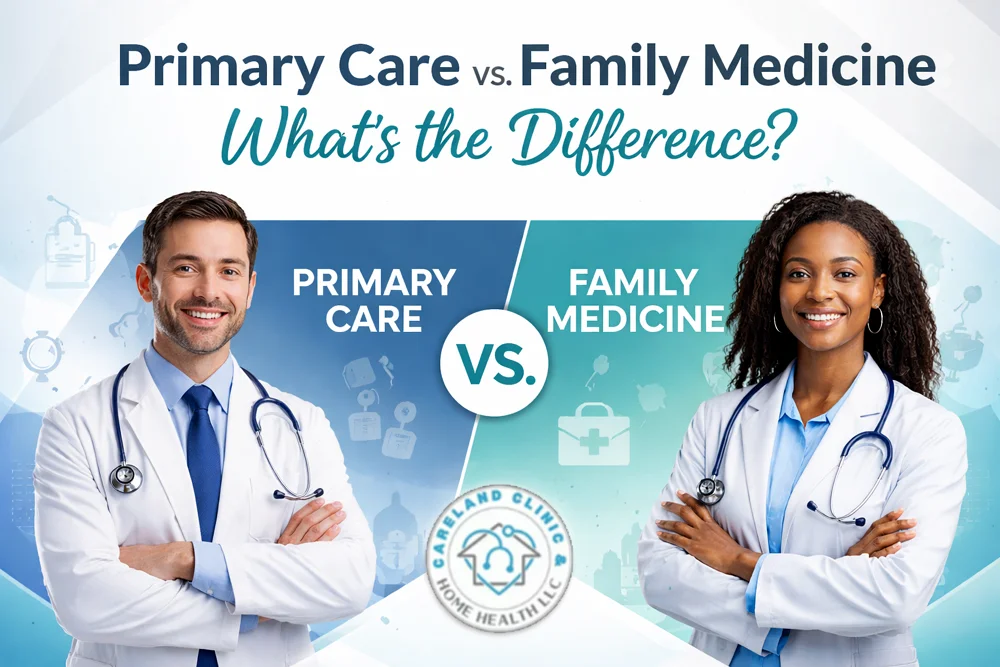
When it comes to primary care vs family medicine, the difference isn’t about better or worse it’s about fit. Primary care offers broad, essential healthcare, while family medicine adds a lifelong, family centered touch. Whether you choose a family doctor, a nurse practitioner, or a local primary care clinic in West Lawn, the goal stays the same keeping you healthy, informed, and supported at every stage of life.
Yes, family medicine is a type of primary care focused on treating all age groups.
Absolutely. Chronic disease management is a core part of primary care.
Family doctors receive specialized training in family medicine, while traditional GPs may not.
Yes, nurse practitioners can diagnose conditions and prescribe medications.
Look for experience, affordability, accessibility, and patient centered care.