
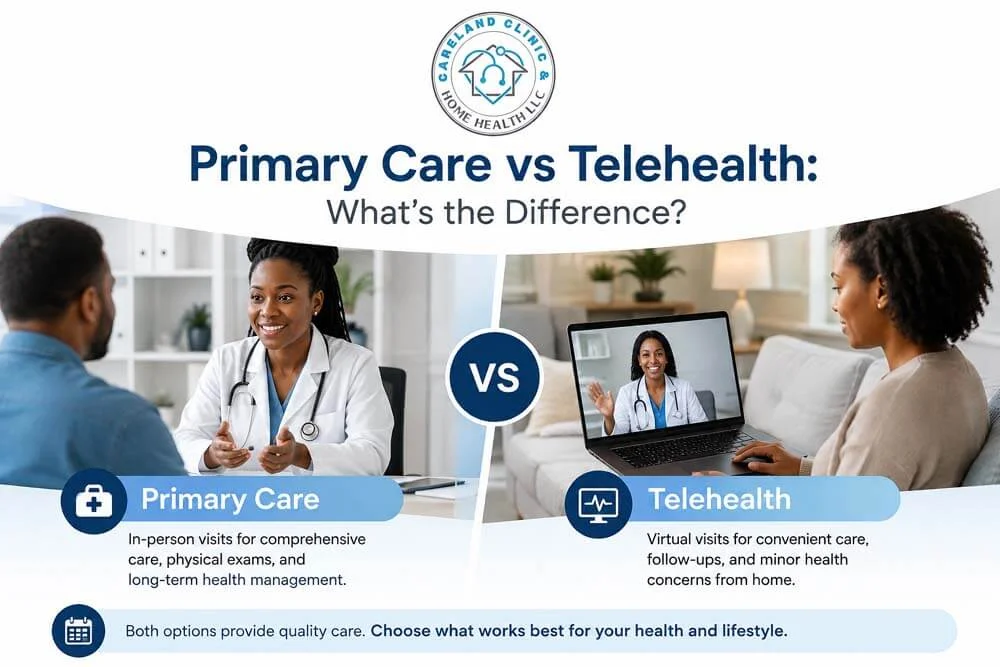
Primary Care vs Telehealth: What’s the Difference?

In today’s fast-evolving healthcare landscape, patients have more options than ever when seeking medical attention. Modern healthcare delivery has transformed, offering flexible solutions that fit busy schedules and diverse medical needs.
Primary Care vs Telehealth:

However, choosing between primary care and telehealth can sometimes feel overwhelming when you are feeling unwell or managing a chronic condition.

While both options provide vital medical support, understanding their distinct advantages helps you make informed decisions about your wellness journey. At CCHH Care, we believe in empowering our community with clear information so you can access the right care at the right time.

Understanding Traditional Primary Care

Traditional primary care serves as the bedrock of long term health management. It involves in person visits to a physician, nurse practitioner, or physician assistant at a medical clinic or doctor’s office.

What is Primary Care?

Primary care focuses on comprehensive, continuous health management for individuals across all life stages. Your primary care provider (PCP) acts as your main healthcare advocate, overseeing everything from routine physical exams to the treatment of complex medical conditions.

Key Benefits of In-Person Primary Care

Exploring the Rise of Telehealth

Telehealth, also known as telemedicine, uses digital communication technologies to deliver healthcare remotely. Furthermore, virtual care has shifted from a convenient alternative to an essential component of modern medical practices.

What is Telehealth?

Telehealth encompasses virtual consultations via secure video calls, phone conversations, and digital messaging platforms. Through these tools, patients can consult healthcare professionals from the comfort of their homes, workplaces, or while traveling.

Major Advantages of Telehealth

When Should You Choose Primary Care?

Although virtual medicine offers incredible ease, certain health conditions demand in person clinical attention. Consequently, recognizing when to visit a clinic ensures your safety and accurate diagnosis.

1. Annual Physicals and Comprehensive Screenings

Full body physical exams require a provider to measure blood pressure, listen to internal organs, check reflexes, and examine skin health directly.

2. Acute or Severe Symptoms

If you experience sudden severe abdominal pain, high fever, chest discomfort, or breathing difficulties, an in-person primary care visit or urgent care evaluation is necessary.

3. Hands On Procedures and Treatments

Services like suture removal, vaccine administration, mole biopsies, and severe wound dressings cannot be completed virtually.

4. Complex Chronic Disease Management

Managing multiple chronic conditions such as advanced diabetes, heart disease, or severe respiratory issues often requires physical checks and frequent blood testing.

When is Telehealth the Best Choice?

Telehealth shines when you need quick, high quality medical advice for non emergency situations. Moreover, it provides an efficient bridge between regular doctor appointments.

1. Minor Ailments and Common Infections

Virtual visits are ideal for treating mild conditions, including:

2. Medication Management and Prescription Refills

If you need a routine prescription renewal for stable conditions like hypertension, telehealth offers a seamless, fast option.

3. Follow-Up Appointments

Reviewing lab results, discussing specialist recommendations, or evaluating progress after starting a new treatment can easily be handled online.

4. Mental Health and Behavioral Therapy

Telehealth has revolutionized mental healthcare. Counseling, therapy, and psychiatric consultations are highly effective and comfortable when conducted in a private home environment.

The Future of Healthcare: A Hybrid Model

Rather than viewing primary care and telehealth as competing options, modern medical practices combine them into a unified, patient centered approach. A hybrid healthcare model allows you to establish a long term relationship with an in person primary care physician while utilizing virtual visits for routine check ins and urgent minor concerns.

At CCHH Care, we believe in providing personalized medical solutions tailored to your unique lifestyle. By blending hands on primary care expertise with the accessibility of virtual appointments, patients receive comprehensive, continuous support at every stage of life.

FAQs

Yes, telehealth providers can prescribe most common medications, including antibiotics, allergy treatments, and maintenance drugs. However, federal and state regulations restrict them from prescribing controlled substances virtually.
Telehealth is equally effective for minor illnesses, routine follow-ups, and mental health consultations. Conversely, physical exams, diagnostic testing, and emergency conditions still require an in-person primary care appointment.
To prepare, choose a quiet, private area with a strong internet connection. Furthermore, write down your symptoms, list your current medications, and have a thermometer or blood pressure monitor ready if available.
Most major insurance plans, Medicare, and Medicaid cover telehealth appointments similarly to standard in-person visits. However, it is always recommended to verify specific coverage details with your insurance provider.
Yes, many healthcare organizations, including primary care centers, offer hybrid services. This means you can see your designated primary care physician either in the office or through a secure virtual call.