
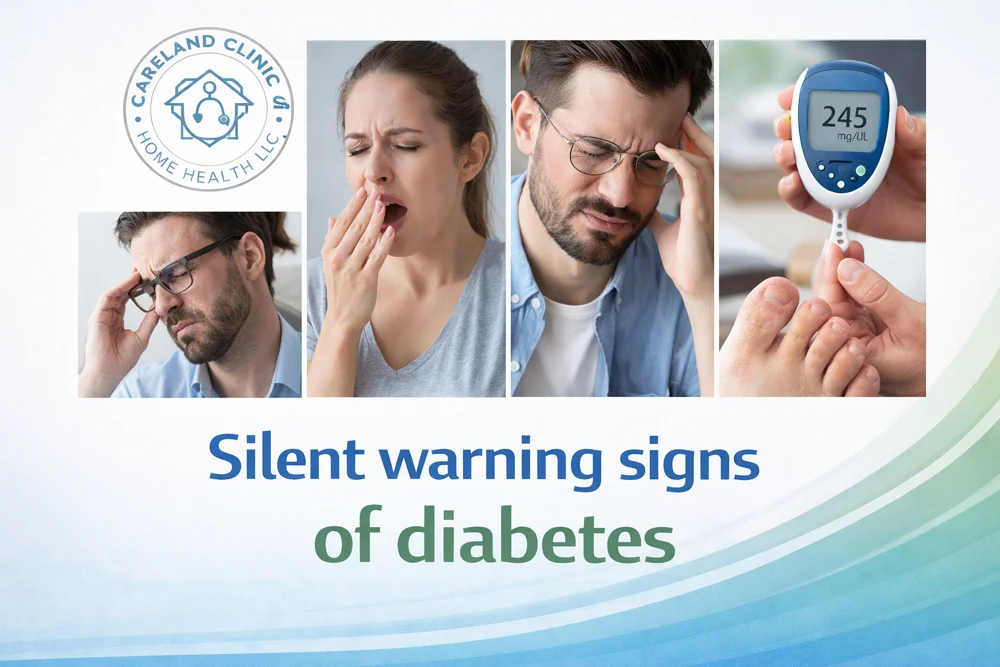
Think of it like a slow leak in a pipe. At first, it’s barely visible, just a few drops here and there. But over time, that tiny leak can cause serious damage. Similarly, rising blood sugar levels quietly affect organs, nerves, and blood vessels without causing immediate pain or alarm.
What’s happening inside your body is actually quite complex. When insulin isn’t working properly, glucose stays in your bloodstream instead of fueling your cells. That’s when problems begin but they don’t always show up in obvious ways.
Let’s be honest who hasn’t felt tired after a long day or thirsty during hot weather? The issue is that early signs of diabetes often mimic normal daily experiences. Feeling hungry, fatigued, or needing to urinate more frequently might not raise any red flags at first.
That’s why diabetes is often called a silent killer. Studies show that symptoms can be so mild that they go unnoticed for years. People simply adapt to these changes, thinking it’s just part of aging or lifestyle.
This type of fatigue isn’t your usual I need a nap feeling it sticks around. It can make simple tasks feel overwhelming and reduce your overall productivity. Many people ignore it, assuming they just need better sleep or less stress, but it could actually be one of the silent warning signs of diabetes.
At the same time, you may find yourself running to the bathroom more often especially at night. According to medical research, frequent urination and excessive thirst are among the earliest signs of high blood sugar.
Sudden weight loss without trying? Or maybe unexpected weight gain? Both can be linked to diabetes. When your body can’t use glucose for energy, it starts burning fat and muscle instead, leading to weight loss.
On the flip side, insulin resistance can cause weight gain, especially around the abdomen. These changes can happen gradually, making them easy to overlook until they become more noticeable.
Have you ever noticed a small cut or bruise taking forever to heal? That’s not just bad luck. High blood sugar levels can affect blood circulation and weaken your immune system.
This slows down your body’s natural healing process. In fact, slow healing wounds are a well known symptom of diabetes. Ignoring this sign can lead to infections and more serious complications over time.
One of the lesser known signs is the appearance of dark, velvety patches on the skin especially around the neck, armpits, or groin. This condition, called acanthosis nigricans, is often linked to insulin resistance.
Ever walked into a room and forgotten why you were there? That mental fuzziness often called brain fog can be linked to fluctuating blood sugar levels.
When your brain doesn’t get a steady supply of glucose, it struggles to function properly. You might feel unfocused, forgetful, or just off. It’s subtle, but it matters.
It’s caused by nerve damage due to prolonged high blood sugar levels, a condition known as diabetic neuropathy. Catching it early can help prevent further damage.
| Complication | Impact |
| Heart Disease | Increased risk of heart attack |
| Kidney Damage | May lead to kidney failure |
| Vision Loss | Risk of blindness |
| Nerve Damage | Chronic pain or numbness |
Here’s the good news diabetes is manageable, especially when caught early. Regular checkups and diabetes screening can help you stay ahead of the condition.
If you notice multiple symptoms like fatigue, frequent urination, and slow healing wounds it’s time to stop guessing and get tested.
Finding an affordable diabetes testing clinic can make a huge difference, especially if you’re on a budget. These clinics offer essential screenings without breaking the bank.
Managing diabetes isn’t just about medication it’s about a complete lifestyle approach. Primary care providers help you create a plan that includes diet, exercise, and regular monitoring.
Think of them as your long term health partner.
If you’re in the area, Diabetes screening in West Lawn, PA offers access to professional care and early diagnosis. Clinics here often provide chronic disease management services, ensuring ongoing support for patients.
It’s not about perfection it’s about consistency.
Diabetes doesn’t always shout it whispers. And those whispers often come in the form of subtle, everyday symptoms that are easy to ignore. From constant fatigue to slow healing cuts, your body is constantly sending signals. The key is learning how to listen.
Catching these silent warning signs of diabetes early can change everything. It gives you the chance to take control, make healthier choices, and avoid serious complications. Don’t wait for symptoms to become severe because by then, the damage may already be underway.