
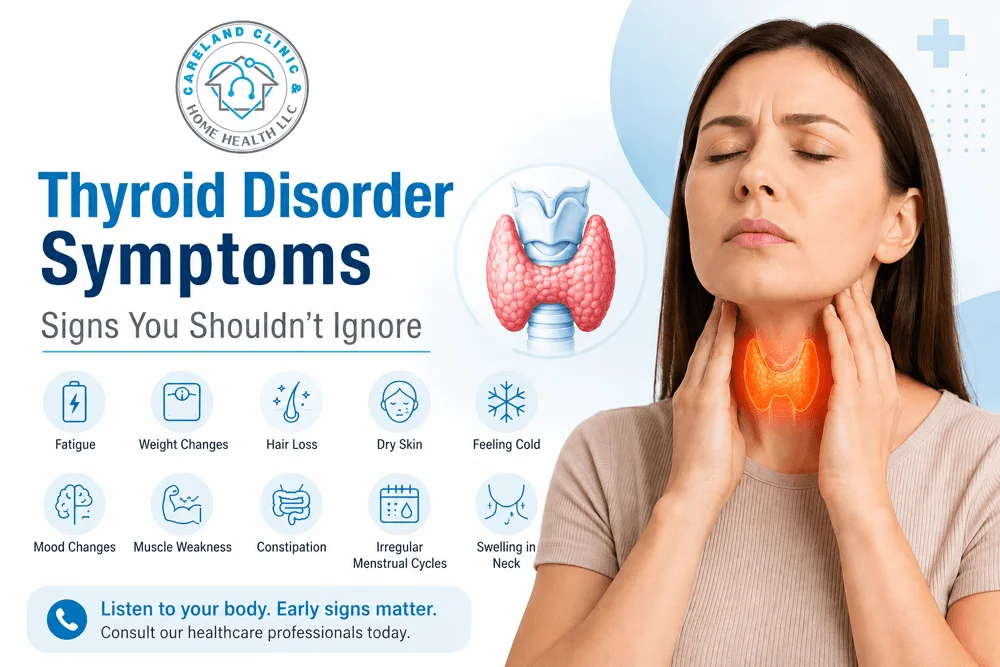
Thyroid Disorder Symptoms: Signs You Shouldn’t Ignore

Thyroid disorders often develop quietly. At first, the symptoms can seem harmless a little fatigue, a few extra pounds, trouble sleeping, or mood changes. Many people blame stress, aging, or a busy lifestyle. The reality is that your thyroid gland may be sending warning signals that deserve attention.

The thyroid is a small butterfly shaped gland located in the front of the neck. Despite its size, it plays a huge role in regulating metabolism, energy production, body temperature, heart rate, and many other essential functions. When thyroid hormone levels become too low or too high, the effects can spread throughout the entire body. According to thyroid health experts, millions of people live with thyroid disease, and many remain undiagnosed because the symptoms often mimic other health conditions.

Understanding the Thyroid Gland

The thyroid gland works like a control center for your body’s metabolism. It produces hormones called T3 (triiodothyronine) and T4 (thyroxine), which help regulate how your body uses energy. These hormones influence everything from heart function and digestion to mood and body temperature. When hormone levels fall outside the normal range, physical and emotional symptoms often appear.

One of the reasons thyroid disorders can be difficult to identify is that their symptoms develop gradually. A person may feel slightly more tired than usual, notice minor changes in weight, or experience subtle mood shifts. Over time, these symptoms can become more noticeable and start interfering with daily life. Research shows that thyroid dysfunction affects millions of people worldwide, with women experiencing thyroid disorders more frequently than men.

Why Thyroid Hormones Matter

Think of thyroid hormones as the body’s thermostat and fuel regulator combined. If hormone levels are too low, many bodily functions slow down. If levels are too high, systems speed up beyond normal limits. This delicate balance explains why thyroid problems can affect nearly every organ system.

Even a small imbalance can influence concentration, sleep quality, digestion, heart rate, and emotional well being. That’s why healthcare providers often use thyroid hormone testing when patients report persistent symptoms that cannot be explained by other conditions. Early diagnosis can help prevent long-term complications and improve quality of life significantly.

Common Thyroid Disorders

Hypothyroidism Explained

Hypothyroidism occurs when the thyroid gland does not produce enough hormones. This condition is often referred to as an underactive thyroid. Since thyroid hormones help regulate metabolism, low hormone levels can cause many body processes to slow down.

People with hypothyroidism frequently report fatigue, cold intolerance, dry skin, constipation, memory problems, and weight gain. These symptoms can appear gradually, making them easy to overlook. Clinical data show that hypothyroidism is one of the most common endocrine disorders worldwide and is especially prevalent among women.

Hyperthyroidism Explained

Hyperthyroidism is the opposite condition. It occurs when the thyroid gland produces excessive amounts of thyroid hormones. This accelerates metabolism and causes the body to operate at a faster pace than normal.

Individuals with hyperthyroidism often experience rapid heartbeat, nervousness, heat intolerance, excessive sweating, unintended weight loss, and difficulty sleeping. Because symptoms can resemble anxiety disorders or stress related conditions, some people remain undiagnosed for months or even years.

Early Signs of Thyroid Problems

Symptoms That Often Go Unnoticed

Many early signs of thyroid dysfunction are subtle. You might notice changes in your energy levels, skin texture, hair health, or mood without immediately connecting them to your thyroid gland. These symptoms often develop slowly, making them easy to dismiss.
Some of the most common early signs of thyroid problems include:
Because these symptoms overlap with many other health conditions, blood testing is usually required to determine whether the thyroid is involved. Experts emphasize that symptoms alone cannot confirm a diagnosis, making proper laboratory evaluation essential.

Underactive Thyroid Gland Symptoms

Unexpected Weight Gain and Thyroid Symptoms

One of the most recognized underactive thyroid gland symptoms is unexplained weight gain. When thyroid hormone production decreases, metabolism slows. As a result, the body burns fewer calories throughout the day.
This does not mean every case of weight gain is caused by hypothyroidism. However, if weight gain occurs alongside fatigue, dry skin, constipation, and cold sensitivity, thyroid testing may be appropriate. Many patients become frustrated when they continue gaining weight despite healthy eating habits and regular exercise. In some cases, thyroid dysfunction may be contributing to the problem.
Weight gain linked to hypothyroidism tends to develop gradually. Fluid retention may also contribute, causing puffiness around the face and extremities. Healthcare professionals often evaluate thyroid function when patients report persistent weight changes that cannot be explained by lifestyle factors alone.

Unexplained Fatigue and Thyroid Disease

Fatigue is one of the most common complaints among people with hypothyroidism. This isn’t the ordinary tiredness that follows a busy day. Instead, it often feels like a constant lack of energy that persists despite adequate sleep.
Many individuals describe feeling mentally foggy, physically drained, and unable to maintain their usual activity levels. Tasks that once felt easy may suddenly require extra effort. Since fatigue can have numerous causes, thyroid testing often becomes part of a broader medical evaluation.

Research and clinical observations consistently identify fatigue as a hallmark symptom of hypothyroidism. Because this symptom overlaps with stress, depression, anemia, and sleep disorders, laboratory testing remains the most reliable way to identify thyroid related causes.

Overactive Thyroid Warning Signs

Symptoms Linked to Excess Hormone Production

An overactive thyroid can feel as though your body’s engine is running at maximum speed. While some people initially appreciate increased energy, the effects often become uncomfortable and disruptive over time.
Common overactive thyroid warning signs include:
These symptoms occur because excess thyroid hormones stimulate multiple body systems simultaneously. The heart works harder, metabolism speeds up, and the nervous system becomes more active. Left untreated, severe hyperthyroidism can lead to serious complications affecting the heart and other organs.

Thyroid Symptoms in Women Over 30

Hormonal Changes and Thyroid Health

Women experience thyroid disorders more frequently than men. Hormonal fluctuations during pregnancy, postpartum recovery, and perimenopause may increase awareness of thyroid related symptoms or contribute to diagnosis during these stages of life.

Common thyroid symptoms in women over 30 include:
Many women assume these symptoms are simply part of aging or hormonal changes. While that can sometimes be true, thyroid dysfunction should not be overlooked. Early evaluation may help identify underlying thyroid conditions before symptoms become more severe.

Thyroid Warning Signs You Should Not Ignore

Symptoms Requiring Medical Attention

Some thyroid related symptoms deserve prompt medical evaluation. While many thyroid disorders develop gradually, certain warning signs may indicate significant hormone imbalance.

Pay attention to:

If these symptoms continue for several weeks or worsen over time, it is wise to discuss them with a healthcare provider. Early diagnosis often leads to more effective treatment and better long term outcomes.

Experts estimate that millions of individuals have thyroid disease without realizing it, highlighting the importance of recognizing symptoms and seeking timely testing.

Thyroid Hormone Levels Blood Test

Understanding TSH, T3, and T4

The most common method of evaluating thyroid function is a blood test. Healthcare providers typically begin by measuring Thyroid Stimulating Hormone (TSH), which helps regulate thyroid activity. TSH testing is widely regarded as the primary screening tool for suspected thyroid dysfunction.
A basic thyroid evaluation may include:
TestPurpose
TSHMeasures thyroid stimulation signals
Free T4Measures circulating thyroxine
Free T3Measures active thyroid hormone
Thyroid AntibodiesDetects autoimmune thyroid disease
When TSH levels are elevated, hypothyroidism may be present. When TSH levels are suppressed, hyperthyroidism may be suspected. Additional tests help confirm the diagnosis and guide treatment decisions.

When to See a Doctor for Thyroid Issues

Getting Tested Early

Many people ask, How do I know if my thyroid is low? The honest answer is that symptoms alone cannot provide certainty. Fatigue, weight gain, mood changes, and other warning signs may suggest thyroid dysfunction, but blood testing is necessary for confirmation.

You should consider speaking with a healthcare provider if you experience:

If you are searching for a thyroid testing clinic near me or a thyroid testing clinic in Pennsylvania, look for healthcare providers experienced in evaluating endocrine disorders. Organizations such as Careland Clinic and Home Health may offer services that help patients assess symptoms and determine whether thyroid testing is appropriate.

Conclusion

Thyroid disorders can affect nearly every aspect of daily life, from energy levels and metabolism to mood and heart function. Because symptoms often develop slowly, many people ignore the warning signs until they become more severe. Understanding the difference between hypothyroidism vs hyperthyroidism symptoms can help you recognize potential issues earlier.

Whether you’re experiencing unexpected weight gain and thyroid symptoms, unexplained fatigue and thyroid disease, or other concerning changes, a simple blood test may provide valuable answers. Early diagnosis and treatment can make a significant difference in managing symptoms and protecting long-term health. Paying attention to your body and seeking medical advice when symptoms persist is one of the most important steps you can take.

FAQs

Common early symptoms include fatigue, weight changes, hair thinning, dry skin, mood swings, and sensitivity to temperature changes.
Symptoms of a low thyroid may include fatigue, weight gain, constipation, dry skin, cold intolerance, and brain fog. Blood tests are needed for diagnosis.
Yes. Hyperthyroidism, in particular, can cause anxiety, nervousness, irritability, and rapid heartbeat.
The primary test is TSH (Thyroid Stimulating Hormone). Healthcare providers may also order Free T3, Free T4, and thyroid antibody tests.
You should seek medical evaluation if symptoms persist for several weeks, interfere with daily activities, or continue worsening over time.